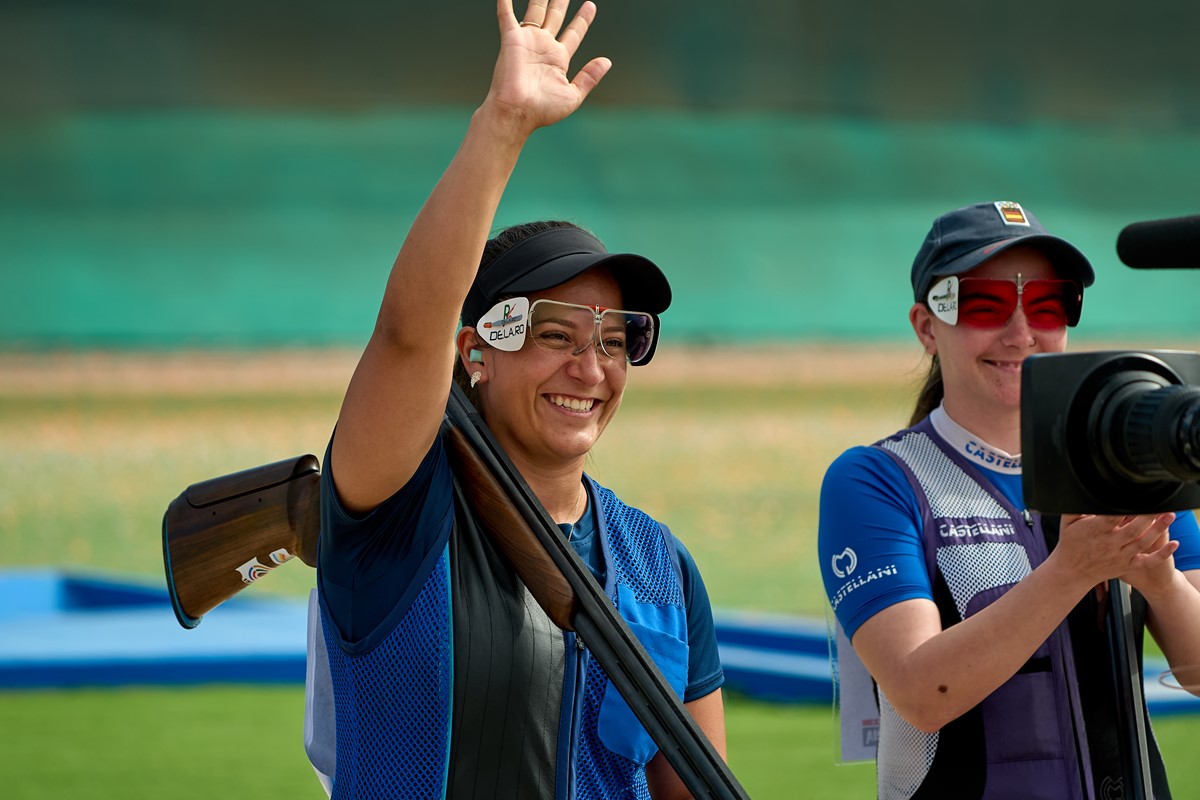
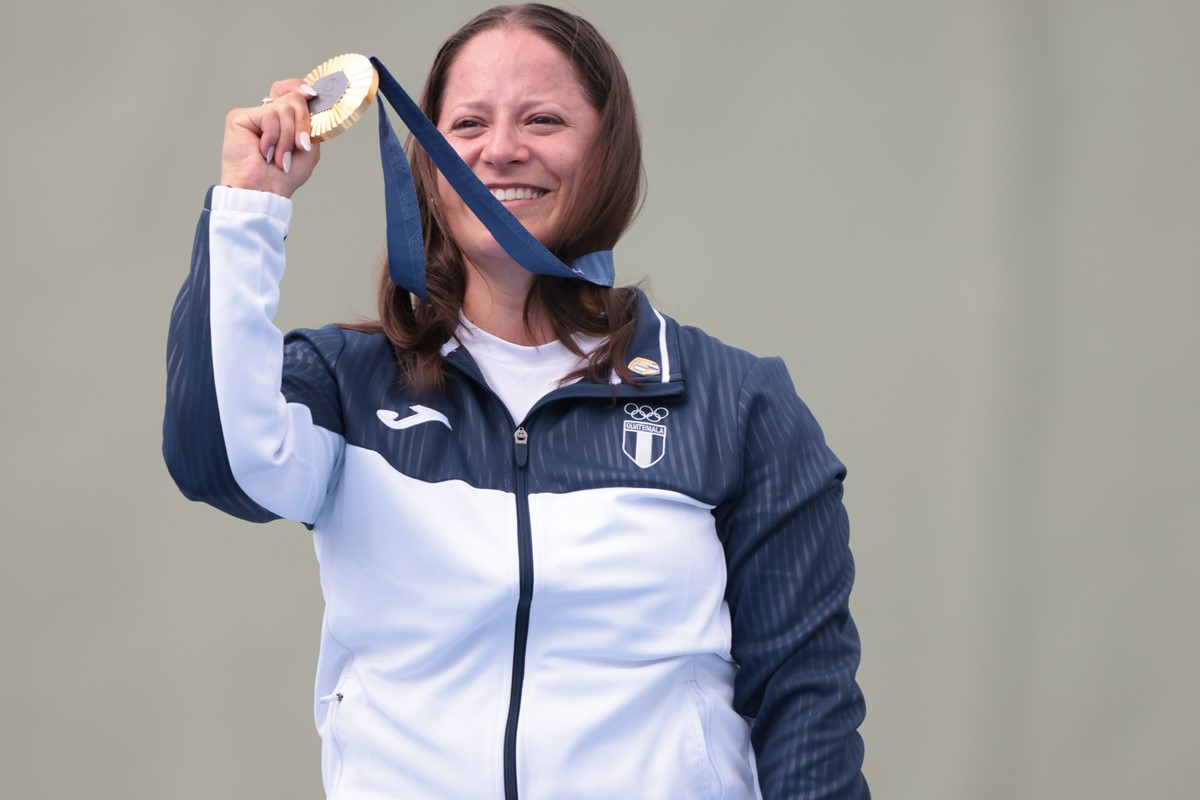
Her success builds on a remarkable competitive journey that includes gold at the Pan American Games Santiago 2023 in Trap Women, as well as a silver medal in Trap Mixed Team and a bronze medal in Trap Women at the ISSF World Cup in Lima last year.
In this International Women’s Day edition, Ruano reflects on inclusion, equality in competition, female leadership, and the responsibility of opening pathways for the next generation.
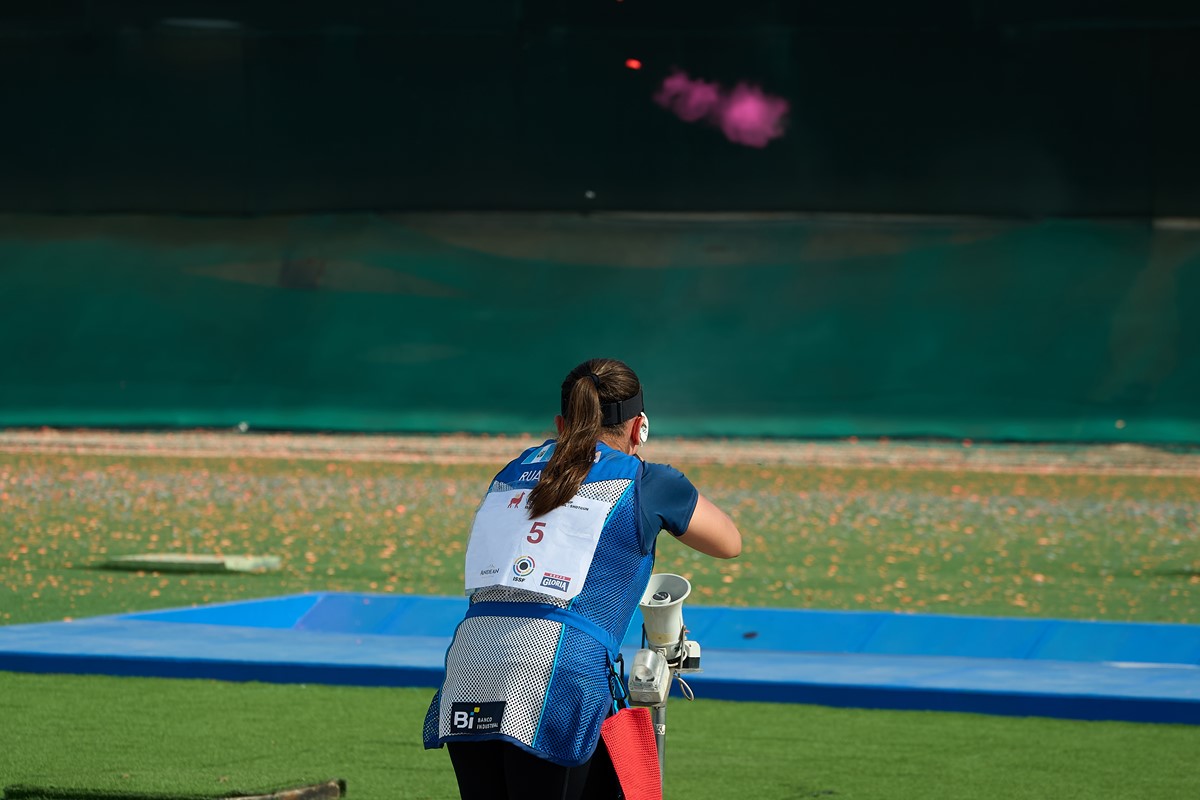
"I would like to begin by thanking you for the opportunity and the honour of having this interview in commemoration of International Women’s Day. It is important that, as women, we have a voice and that we can amplify it worldwide. Because every time a woman raises her voice, she opens the way for many more", she stated.
International Women’s Day highlights inclusion across sport. In your view, what does inclusion mean in precision sport?
For me, inclusion in sport means that we all have exactly the same conditions to demonstrate our level. In a sport like shooting, physical strength is not entirely what determines success; rather, it is discipline, consistency, emotional control and psychological strength.
Inclusion is not only about allowing women to participate under equal conditions, but also about guaranteeing the same opportunities — such as access to training, visibility, and technical and financial support.
As an elite athlete, how have you experienced the evolution of opportunities for women in shooting sport?
I believe I have experienced a very significant change in my 13 years as a shooter. When I started in 2013, women qualified for the final over 75 targets, while men had a different format. Today, the competitive conditions are exactly the same for both genders. We compete under the same format, with the same demands and the same level of pressure. That change has been very important because it sends a clear message of equality within the sport.
The most recent Olympic Games, Paris 2024, were also a clear example of this evolution, with the same number of male and female competitors. We can also see progress in performance levels. Without being misunderstood, at least in Trap, the difference in targets hit to qualify for the final between men and women was just one target.
Something that makes me especially happy is the growth of women in my country. When I started in Guatemala, there were very few women practicing the sport — I would say no more than eight shooters. Today, we see more women joining every year, more girls becoming interested, and new youth generations emerging. For me, that speaks to an evolution in both mindset and opportunity. Of course, we must continue this effort, especially in countries where access to sport for women is still limited.
International Women’s Day highlights inclusion across sport. In your view, what does inclusion mean in precision sport?
For me, inclusion in sport means that we all have exactly the same conditions to demonstrate our level. In a sport like shooting, physical strength is not entirely what determines success; rather, it is discipline, consistency, emotional control and psychological strength.
Inclusion is not only about allowing women to participate under equal conditions, but also about guaranteeing the same opportunities — such as access to training, visibility, and technical and financial support.
As an elite athlete, how have you experienced the evolution of opportunities for women in shooting sport?
I believe I have experienced a very significant change in my 13 years as a shooter. When I started in 2013, women qualified for the final over 75 targets, while men had a different format. Today, the competitive conditions are exactly the same for both genders. We compete under the same format, with the same demands and the same level of pressure. That change has been very important because it sends a clear message of equality within the sport.
The most recent Olympic Games, Paris 2024, were also a clear example of this evolution, with the same number of male and female competitors. We can also see progress in performance levels. Without being misunderstood, at least in Trap, the difference in targets hit to qualify for the final between men and women was just one target.
Something that makes me especially happy is the growth of women in my country. When I started in Guatemala, there were very few women practicing the sport — I would say no more than eight shooters. Today, we see more women joining every year, more girls becoming interested, and new youth generations emerging. For me, that speaks to an evolution in both mindset and opportunity. Of course, we must continue this effort, especially in countries where access to sport for women is still limited.
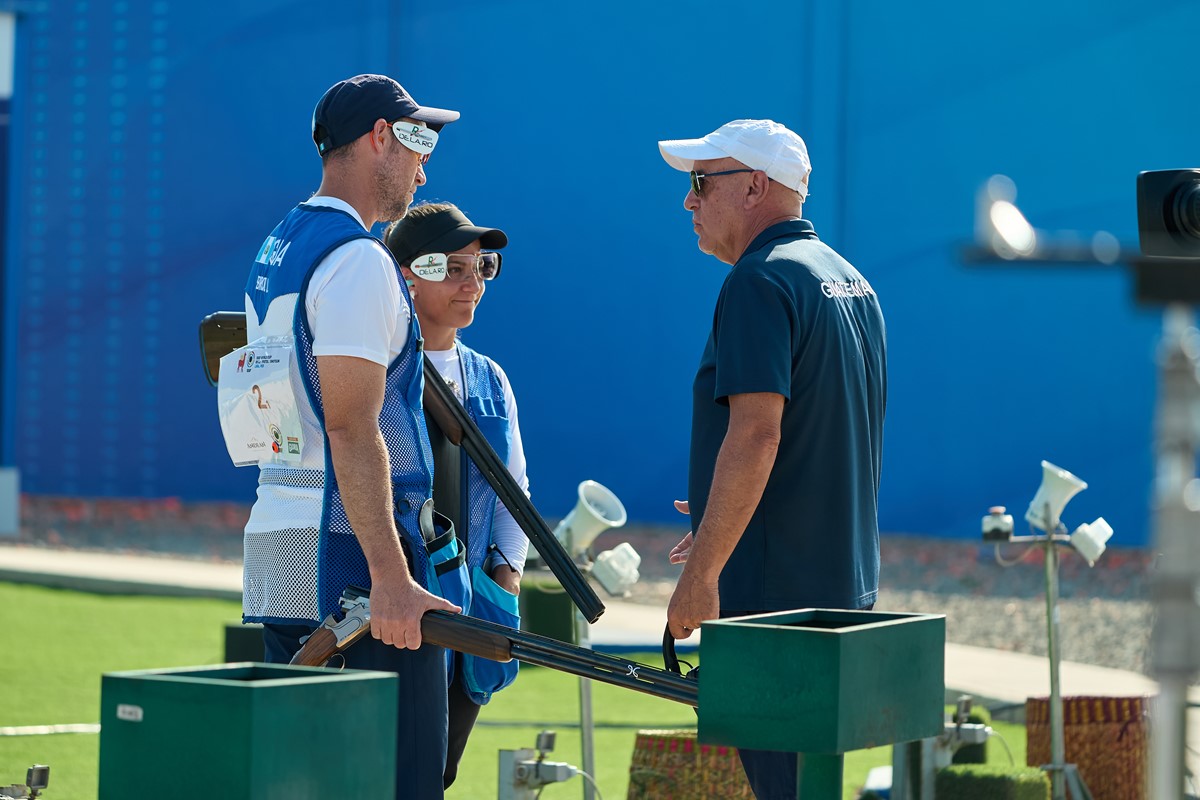
What message would you give to young girls considering entering shooting sport?
I would tell young girls not to be afraid to try something different like this sport. When I had the opportunity to start at 18, I had no idea what it was about. I do not come from a family with a tradition in shooting or similar sports — in fact, I had never even seen or touched a firearm before.
Like many people, I also had certain stereotypes in mind. I thought it was a sport only for men, or that a woman, especially in my country, could not go very far in something like this. But shooting proved the opposite.
Beyond achievements, goals and medals, this sport has taught me much more important lessons: patience, self-control, resilience and self-confidence. It has also given me the opportunity to open the way for new generations of women.
These lessons are reflected not only in my sporting career, but in my daily life and in my development as a person. If I was able to start knowing nothing and reach this point, any girl who dares to try can do it too.
How do mixed team events contribute to a sense of equality and shared responsibility in competition?
In my opinion, mixed team events are a very clear representation of equality and teamwork. One athlete’s score is not worth more than the other’s, and neither has more opportunities to score. Both the woman and the man have 75 opportunities to score points, which means the responsibility is exactly the same. Pressure, strategy and effort are shared 50–50.
It is an event I really enjoy because it makes me feel that positive responsibility of contributing to a team result. It also strengthens mutual respect and reinforces the idea that performance in this sport has no gender.
I would tell young girls not to be afraid to try something different like this sport. When I had the opportunity to start at 18, I had no idea what it was about. I do not come from a family with a tradition in shooting or similar sports — in fact, I had never even seen or touched a firearm before.
Like many people, I also had certain stereotypes in mind. I thought it was a sport only for men, or that a woman, especially in my country, could not go very far in something like this. But shooting proved the opposite.
Beyond achievements, goals and medals, this sport has taught me much more important lessons: patience, self-control, resilience and self-confidence. It has also given me the opportunity to open the way for new generations of women.
These lessons are reflected not only in my sporting career, but in my daily life and in my development as a person. If I was able to start knowing nothing and reach this point, any girl who dares to try can do it too.
How do mixed team events contribute to a sense of equality and shared responsibility in competition?
In my opinion, mixed team events are a very clear representation of equality and teamwork. One athlete’s score is not worth more than the other’s, and neither has more opportunities to score. Both the woman and the man have 75 opportunities to score points, which means the responsibility is exactly the same. Pressure, strategy and effort are shared 50–50.
It is an event I really enjoy because it makes me feel that positive responsibility of contributing to a team result. It also strengthens mutual respect and reinforces the idea that performance in this sport has no gender.
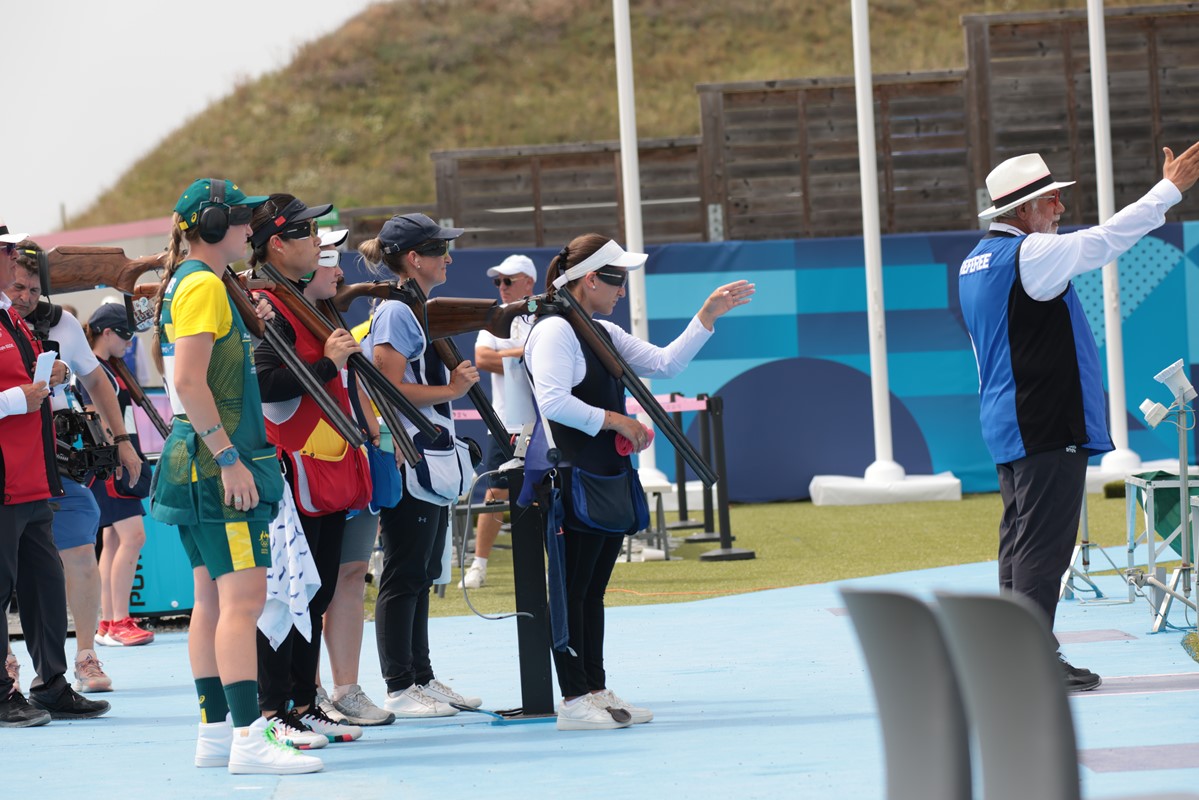
How important is visibility of women in leadership positions for the next generation?
For me, it is 100% fundamental. When a girl sees a woman as a true leader — whether as an Olympic champion, a national team coach, a director, a judge, or a federation or national president — she understands that her dreams have no limits and that, if she commits herself, she can go as far as she wants, both inside and outside sport.
In my case, the people who inspired me to dream big and never give up have generally been women leaders who dared to dream big themselves. From my early days in gymnastics, when I had the opportunity to meet the second Guatemalan gymnast to represent our country at the Olympic Games, she sparked that dream in me of one day representing my country at the Olympics.
My mother has also been my greatest example since childhood, always encouraging me to aim high. And of course, there are great role models in my sport who have shown me that nothing is impossible — among them Zuzana Štefečeková, Fátima Gálvez, Jessica Rossi, Kim Rhode and Francisca Crovetto. There are truly many women who have demonstrated leadership both inside and outside sport.
Looking ahead, what priorities should shape the future of inclusion in international shooting sport?
One priority must be inclusion starting from youth categories. Each federation should develop strong programmes for girls from an early age, ensuring access to the sport, proper development, and opportunities not only to train but also to compete at national and international levels.
Ultimately, the goal of sport is not only to win medals and achieve results, but also to provide an opportunity for growth and life development.
Finally, it is important to continue strengthening female visibility — not only as athletes, but also in technical and leadership positions. Because when we invest in today’s girls, we are building tomorrow’s leaders.
For me, it is 100% fundamental. When a girl sees a woman as a true leader — whether as an Olympic champion, a national team coach, a director, a judge, or a federation or national president — she understands that her dreams have no limits and that, if she commits herself, she can go as far as she wants, both inside and outside sport.
In my case, the people who inspired me to dream big and never give up have generally been women leaders who dared to dream big themselves. From my early days in gymnastics, when I had the opportunity to meet the second Guatemalan gymnast to represent our country at the Olympic Games, she sparked that dream in me of one day representing my country at the Olympics.
My mother has also been my greatest example since childhood, always encouraging me to aim high. And of course, there are great role models in my sport who have shown me that nothing is impossible — among them Zuzana Štefečeková, Fátima Gálvez, Jessica Rossi, Kim Rhode and Francisca Crovetto. There are truly many women who have demonstrated leadership both inside and outside sport.
Looking ahead, what priorities should shape the future of inclusion in international shooting sport?
One priority must be inclusion starting from youth categories. Each federation should develop strong programmes for girls from an early age, ensuring access to the sport, proper development, and opportunities not only to train but also to compete at national and international levels.
Ultimately, the goal of sport is not only to win medals and achieve results, but also to provide an opportunity for growth and life development.
Finally, it is important to continue strengthening female visibility — not only as athletes, but also in technical and leadership positions. Because when we invest in today’s girls, we are building tomorrow’s leaders.